
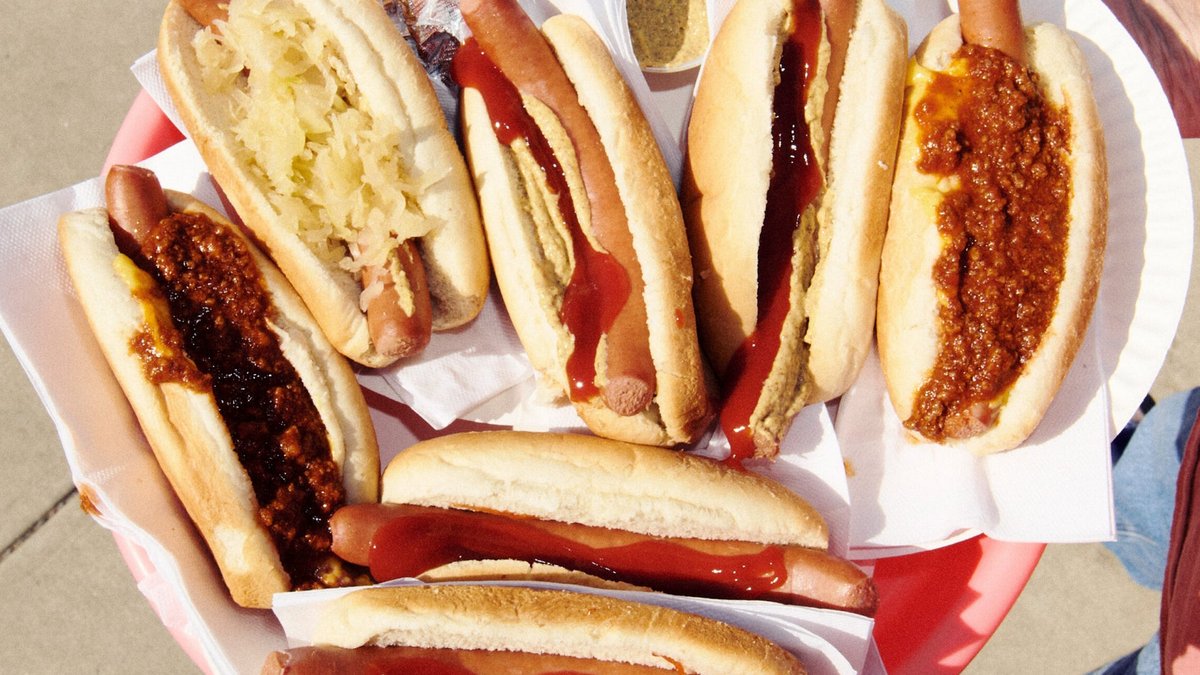
Hot dogs offer far more than ketchup and mustard. Across the U.S. and other countries, cooks transform the simple frank into a showcase for regional ingredients—bacon wraps, spiced sauces, pickled relishes, and even melted mozzarella.
Rhode Island’s “All the Way” Wieners
This regional favorite layers warmly spiced meat sauce, yellow mustard, finely chopped white onion, and celery salt. The full combination is known locally as “all the way.”
The dish reflects Rhode Island’s diner culture, where generations have enjoyed the same recipe. The celery salt adds a distinct, understated flavor that distinguishes it from other styles.
Sonoran Dogs: Bacon-Wrapped and Loaded
Originating in Arizona, these franks begin with bacon-wrapped sausages, pan-fried to crispy perfection. They’re placed in bolillo-style rolls and topped with sautéed onions, tomatoes, avocado, and a homemade jalapeño sauce.
Danger Dogs: L.A.’s Late-Night Staple
Sold at street corners and outside sporting events in Los Angeles, these bacon-wrapped franks are griddled until charred. Caramelized peppers, onions, and fresh jalapeños top them, creating a mix of sweetness and spice.
This version comes from actor and L.A. restaurateur Danny Trejo. The dogs are usually served in soft buns that barely contain the overflowing toppings.
Their messy, indulgent nature makes them stand out from basic backyard wieners. The name hints at their reputation—easy to enjoy, difficult to resist.
Related: No Raw Fish, No Problem: Tasty Choices for Everybody
Cheesy Korean Corn Dogs: A Sweet and Savory Twist
Korean corn dogs reimagine the American hot dog. The franks are stuffed with stretchy mozzarella, coated in a crisp panko batter, and deep-fried until golden. A dusting of sugar and drizzles of ketchup and mustard create a sweet-savory balance.
Their origins trace back to U.S. military influence in Korea, where American-style hot dogs were adapted with local flavors. The result is a snack that prioritizes texture—crunchy outside, gooey inside.
Even familiar foods can evolve into something new when they cross borders, as these hybrid creations demonstrate.
Southern Hot Links and Chow Chow
Smoky, slightly spiced hot links are a staple at cookouts in the Southeast and Texas. This version pairs them with chow chow, a tangy Southern relish made from pickled vegetables. The vinegar in the relish cuts through the richness of the sausage.
Chow chow is more than a topping—it’s a tradition. The mix of cabbage, peppers, and onions adds crunch and brightness to the dish.
Choripán: Argentina’s Flame-Kissed Sandwich
Argentina’s choripán settles any debate about whether a hot dog qualifies as a sandwich. The flame-grilled chorizo is served in a crusty roll and slathered with chimichurri, a garlicky, herby sauce.
Popular in Chile, Uruguay, and parts of Brazil, the sandwich is a street-food staple. The chimichurri, made with parsley, oregano, and vinegar, delivers a fresh, zesty kick. The quality of the sausage and the char from the grill make the difference.
Maryland’s Crabmeat and Old Bay Hot Dog
Maryland’s version incorporates the state’s love of seafood. A grilled frank is topped with crabmeat, Old Bay seasoning, grilled corn, and celery leaves. Old Bay-dusted potato chips add crunch.
Related: Saigon’s Best Vietnamese Coffee Drinks
The combination of sweet crab and smoky sausage might seem unusual, but it works well. The Old Bay, a blend of celery salt, paprika, and other spices, unifies the flavors. The dish reflects the state’s coastal identity.
Pineapple Salsa and the Great Topping Debate
Pineapple on a hot dog sparks strong opinions, especially among those who reject it on pizza. Here, it adds a sweet, juicy contrast to the richness of avocado in the salsa. The texture contrasts with the softness of the frank, creating a balanced bite.
The salsa, often made with diced pineapple, jalapeños, and cilantro, brings a tropical element. Even divisive ingredients can find harmony in the right context.
Potato Salad as a Topping, Not a Side
Potato salad is a cookout classic, but this recipe reimagines it as a topping. The cool, creamy salad contrasts with the smoky, savory frank, turning a side dish into the star.
The idea isn’t entirely new—some diners have long served hot dogs with a scoop of potato salad on top. Here, it’s deliberate, merging two cookout staples into one. The creaminess softens the snap of the sausage, while the vinegar in the dressing cuts through the fat.
This small change might alter how people approach their plates. The next time someone reaches for potato salad, they may consider placing it on their dog instead.
These variations show that the humble hot dog can be much more than a quick meal. Whether wrapped in bacon, smothered in sauce, or topped with unexpected ingredients, it adapts to local tastes and sometimes even redefines them.


